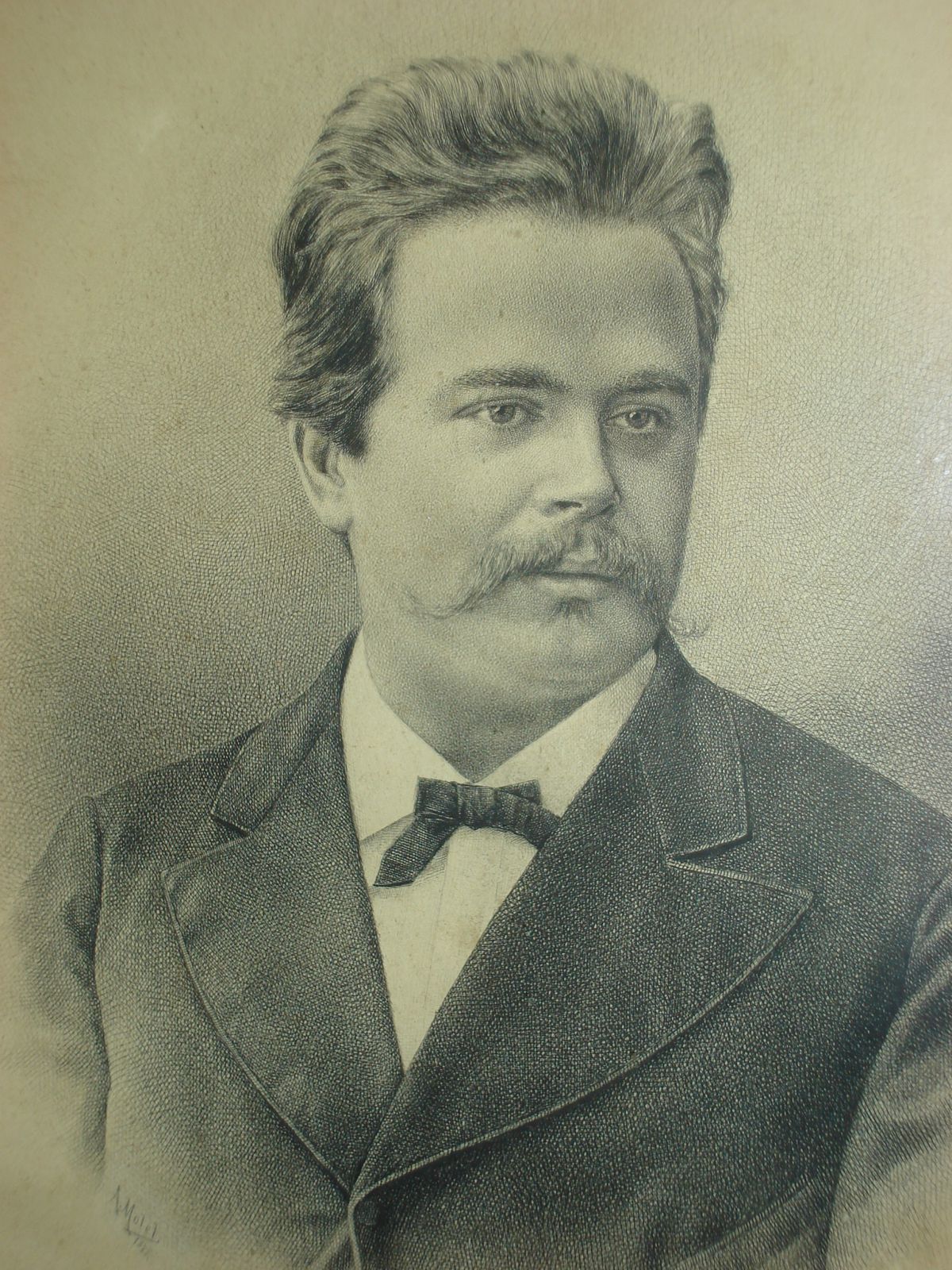
Milutin Bojić
Portraits
← Older revision
Revision as of 02:17, 28 March 2013
Line 17:
Line 17:
−
Milutin Bojic (18 May 1892 - 8 November 1917) was a poet, theatre critic, playwright,and soldier, born in Belgrade and died prematurely in Thessaloniki in 1917. He was 25 when he died.
+
Milutin Bojic (18 May 1892 - 8 November 1917) was a poet, theatre critic, playwright, and soldier, born in Belgrade and died prematurely in Thessaloniki in 1917. He was 25 when he died.
Milutin Bojic is the most famous of the many Serbian writers, poets and painters to die in World War I. In his brief life he wrote works that reflect two major themes: the Serbs' powerful national pride and their agony during the disasterous war. Even more so than his plays and epics, the war lyrics in "Pesme bola i ponosa" (Poems of Pain and Pride), published in 1917 in Thessaloniki, made him a popular war poet. His personal suffering seemed to embody Serbian history at that juncture of greatness and disaster.
Milutin Bojic is the most famous of the many Serbian writers, poets and painters to die in World War I. In his brief life he wrote works that reflect two major themes: the Serbs' powerful national pride and their agony during the disasterous war. Even more so than his plays and epics, the war lyrics in "Pesme bola i ponosa" (Poems of Pain and Pride), published in 1917 in Thessaloniki, made him a popular war poet. His personal suffering seemed to embody Serbian history at that juncture of greatness and disaster.
Line 26:
Line 26:
Bojic survived the Serbian army's retreat through Montenegro and Albania and the desperation of Corfu,and proved his worth as a poet a year or more before his untimely death. Many of his poems were written while he was recuperating in the hospital. And yet in the end, he succumbed to tuberculosis in Thessaloniki. "Our church bells toll dead instead of hours," he wrote of seeing his countrymen dying around him. At the time of the retreat Bojic had been working on an epic poem, "Cain", in which he compared Bulgaria's attack on Serbia to the biblical Cain's attack on his brother, Abel. The poem was one of the few things that he carried with him in his knapsack as he made his journey over the Albanian mountains. Upon arriving at the Adriatic seashore only to see his fellow Serbs being thrown out to the sea for burial, he penned one of the most moving war poems of his generation: Ode to a Blue Sea Tomb or better known as Plava Grobnica (simply translated Blue Graveyard).
Bojic survived the Serbian army's retreat through Montenegro and Albania and the desperation of Corfu,and proved his worth as a poet a year or more before his untimely death. Many of his poems were written while he was recuperating in the hospital. And yet in the end, he succumbed to tuberculosis in Thessaloniki. "Our church bells toll dead instead of hours," he wrote of seeing his countrymen dying around him. At the time of the retreat Bojic had been working on an epic poem, "Cain", in which he compared Bulgaria's attack on Serbia to the biblical Cain's attack on his brother, Abel. The poem was one of the few things that he carried with him in his knapsack as he made his journey over the Albanian mountains. Upon arriving at the Adriatic seashore only to see his fellow Serbs being thrown out to the sea for burial, he penned one of the most moving war poems of his generation: Ode to a Blue Sea Tomb or better known as Plava Grobnica (simply translated Blue Graveyard).
−
+
==References==
==References==
* Adapted in part from Serbian Wikipedia: http://sr.wikipedia.org/wiki/%D0%9C%D0%B8%D0%BB%D1%83%D1%82%D0%B8%D0%BD_%D0%91%D0%BE%D1%98%D0%B8%D1%9B
* Adapted in part from Serbian Wikipedia: http://sr.wikipedia.org/wiki/%D0%9C%D0%B8%D0%BB%D1%83%D1%82%D0%B8%D0%BD_%D0%91%D0%BE%D1%98%D0%B8%D1%9B
http://commons.wikimedia.org/w/index.php?title=Milutin_Boji%C4%87&diff=93422317&oldid=93415745


/image%2F0119748%2F20140527%2Fob_5bc3f3_alfred-molet-timbre-postal-01.JPG)
/https%3A%2F%2Fassets.over-blog.com%2Ft%2Fcedistic%2Fcamera.png)
/image%2F0119748%2F20140527%2Fob_49a920_alfred-molet-timbre-postal-01.JPG)
/image%2F0119748%2F20140511%2Fob_63b87d_carte-02.jpg)