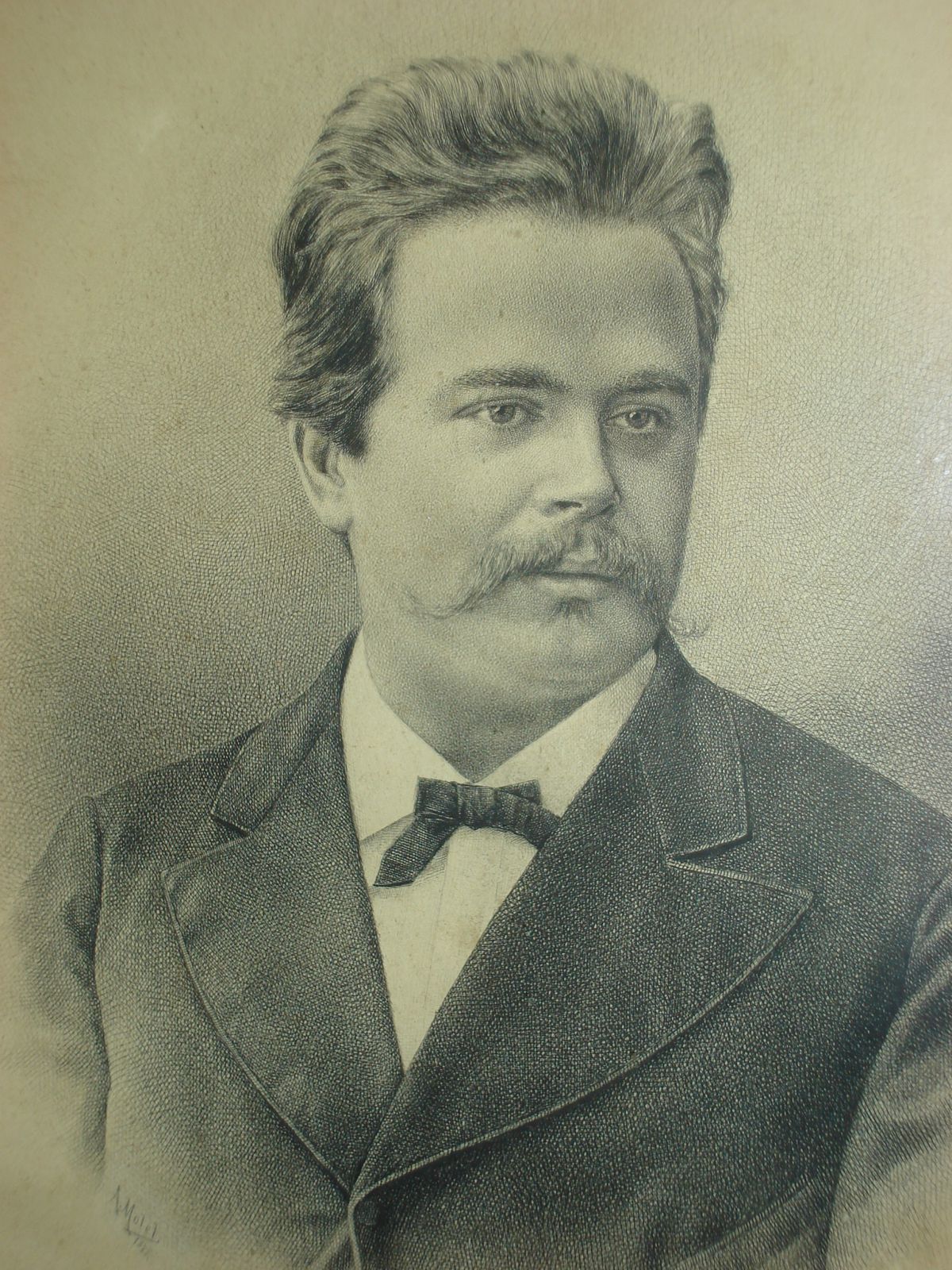
Category:Wallace Bruce
Commons is not a wikipedia, category texts should be minimal
← Older revision
Revision as of 18:22, 2 April 2013
Line 1:
Line 1:
−
Wallace Bruce, poet, was born at Hillsdale, Columbia county, N. Y., Nov. 10, 1844. He was graduated at Yale college in 1867, with distinguished honors, and then visited Europe, where, while in Paris in 1870, he witnessed some of the stormiest scenes of the Franco-Prussian war. Returning to the United States in 1871, he lectured before literary societies. In 1875 he delivered his poem, "Parson Allen's Ride," at the centennial celebration at Bennington, Vt. Mr. Bruce was appointed United States consul in Edinburgh, Scotland, July 1, 1889, by President Harrison. While in Scotland he was instrumental in securing the erection in Edinburgh of a statue of Lincoln to commemorate the service of Scottish-American soldiers in the American civil war. The monument was designed by a Union veteran soldier, and stands in Old Calton burying-ground, where a number of Scotch-American soldiers are buried. He published in 1878 The Land of Burns, in 1880 The Yosemite, in 1882 The Hudson, in 1883 The Long Drama, a centennial poem, delivered at Newburg, N. Y., in 1884 From the Hudson to the Yosemite, in 1888 Old Homestead Poems, and in 1894 Wayside Poems.
+
Wallace Bruce, poet, was born at Hillsdale, Columbia county, N. Y., Nov. 10, 1844. He was graduated at Yale college in 1867, with distinguished honors, and then visited Europe, where, while in Paris in 1870, he witnessed some of the stormiest scenes of the Franco-Prussian war. Returning to the United States in 1871, he lectured before literary societies. In 1875 he delivered his poem, "Parson Allen's Ride," at the centennial celebration at Bennington, Vt. Mr. Bruce was appointed United States consul in Edinburgh, Scotland, July 1, 1889, by President Harrison. While in Scotland he was instrumental in securing the erection in Edinburgh of a statue of Lincoln to commemorate the service of Scottish-American soldiers in the American civil war. The monument was designed by a Union veteran soldier, and stands in Old Carlton burying-ground, where a number of Scotch-American soldiers are buried. He published in 1878 The Land of Burns, in 1880 The Yosemite, in 1882 The Hudson, in 1883 The Long Drama, a centennial poem, delivered at Newburg, N. Y., in 1884 From the Hudson to the Yosemite, in 1888 Old Homestead Poems, and in 1894 Wayside Poems.
−
−
Hon. Wallace Bruce
−
Orator, Scholar, Poet, Statesman, and Patriot
−
It was noted in a Redpath Lyceum Bureau publication to promote his lectures for the 1894-95, that the Hon. Wallace Bruce had delivered over two thousand lectures at home and abroad by then.
−
Born in 1844 in Hillsdale, NY, to Alfred Bruce, and Mary McAlpine Bruce. Wallace Bruce was descended from revolutionary war heroes John Bruce, and Consider Wood. Patriotism interlaced his poems and writings. Wallace was married to Annie Becker, and they had three children, Clara, Kenneth, and Malcolm. As a child he was distinguished for zeal in scholarship and love of literature. At the age of thirteen he
−
translated a portion of the first book of the AEneid into English verse. At the age of sixteen, he entered Claverack College, graduating as valedictorian. Afterward he attended Yale, where he distinguished himself as scholar, writer, and speaker, winning six literary honors. Including first prizes in English composition and public debate. He served as the editor of the Yale Literary Magazine by unanimous vote of his class. In 1869 he began practicing law. In 1870 went to Great Britain and France, he was in Paris the night Napoleon was captured at Sedan. He walked over a large part of Scotland and England, studying the characteristics and customs of the people. On his return to the Hudson, he adopted literature as his life work, and he was received with marked favor on the Lecture Platform. In 1871, he went to Poughkeepsie, NY, where he resided for 18 years. In 1872, he was invited to lecture on the Poughkeepsie Lyceum, the forerunner to the Chautauqua Movement. It was a brilliant course, consisting of John B. Gough, Robert Collyer, DeWitt Talmage, Daniel Doughtery, etc, Wallace was awarded the Palm of the Winter Entertainment. His fame as a lecturer was established in the Hudson Valley. His fame increased throughout the state. and within two years he had all the appointments he was able to fill. By 1894, he had appeared ten times on the Poughkeepsie Lyceum, always showcased as the opening or closing lecture of the course.
−
Between 1871 and 1889, in addition to orations and poems on public occasions, Wallace lectured in every town and city in New England, the middle and western states, aggregating over two thousand engagements between New York and San Francisco. Including the new and growing “Chautauqua Movement” These speaking engagements included invitations to the Florida Chautauqua beginning in 1885, the Chautauqua he would take on as a personal love. Wallace recalled for a 1908 article that after a lecture at the Chautauqua Institute, that in August 1884 while giving his lecture “Native Mettle” at the Mother Chautauqua, two men, (W. J. Van Kirk, and C. C. Banfill), representing a place called Lake DeFuniak in Florida,approached him and asked him if they formed a Chautauqua in that place, would he join them in the endeavor. Wallace replied “Let us go and sit under a tree and we will talk it over”. From this he noted Mr. Van Kirk would always refer to the Florida Chautauqua as the “Shade tree Chautauqua” because of that meeting. He remembers that when he arrived in Nashville, on the way to Lake DeFuniak, he had stopped to speak at the Hall of Representatives there. When getting off the train, he was handed a telegram from Lake DeFuniak asking if he would consider taking a plot of land instead of his fee for speaking. On his arrival, it was agreed they would pay his speaker fee, but while here he remembered the following, “As I was walking around the lake the evening of my closing lecture, one of our glorious DeFuniak sunsets illuminated the waters, the air was sweet and balmy and I thought of Mrs. Bruce and the children who were at home on the banks of the Hudson, recovering from a long illness and waiting at Poughkeepsie for the May sunshine before they could get out of doors. It occurred to me what is the use of waiting for summer when I can take them where summer is. So I wired home I had found a spot full of health and sunshine, and to get ready for Florida as I was coming to get them immediately.”
−
After bringing his family here and selecting his home site (the location of his Dream Cottage) he remembered, “Within two weeks of her arrival here she was able to walk around the lake with a promise of complete and lasting restoration from the paralysis induced by diphtheria”, Wallace also bought the parcels behind his new winter home, and created Alpine Park, dedicated to the memory of his mother, and used for portions of the assembly each year. From 1885 to 1889, Mr. Bruce would take the stage in DeFuniak, as one of the prominent speakers of the young Florida Chautauqua. By 1888, he and a group of investors would buy out the original members of the Florida Chautauqua Association, with an investment of $1,500 each. He was elected the president of the Florida Chautauqua Association, but in June 1889, would have to resign that position to accept his new position as the U. S. Consul to Scotland.
−
While in Edinburgh for four years he was invited to appear at nearly every lecture course in the realm, and the Edinburgh Literary Institute. In Edinburgh, he would met the widow of a Scot solider who fought for the Union during the American Civil War, he learned that the soldier was buried in an unmarked grave, as were several of those who gave service to the United States during this time. He began an effort to have a place set aside and a monument erected to honor the men how had fought to preserve the Union, and in such he was given ground at the Old Calton Burying Grounds, in Edinburgh, for these men to be buried, on which he erected a statue of Lincoln. Wallace raised the funds for this statue himself, with the help of his family, receiving funds from men such as Andrew Carnegie and many others to build the statute. It was the first statue to be erected of an American president outside the United States. Through this action, Wallace formed a lifelong friendship with the former Presidents son Robert Todd Lincoln.
−
Wallace would continue to build on his reputation while in Scotland, not since Nathaniel Hawthorne, had a Consul been so welcomed. He was pronounced the Poet Laureate of the Lodge Canongate Kilwinning, the successor to Robert Burns, a man Wallace greatly respected. Later he was elected Honorary Corresponding Member of The Scottish Society of Literature and Art succeeding the poet, John Greenleaf Whittier. He gave the address for the the unveiling of Sumingtons Momument at Lead Hills. He gave several lectures in England, and was enthusiastically greeted by the Parkside Institute of London.
−
In the midst of such a busy life, his work would appear in the Harper’s Weekly, and Blackwoods magazine. Bishop John Heyl Vincent personally requested Wallaces presence to speak the Chautauqua Institute during the season. After a long and honorable career as the Consul, Wallace returned to the United States, and in 1893 was reelected to the position of President of the Florida Chautauqua, a role he would fill until his death in Jan. 1914. Wallace related that when he returned to the Florida Chautauqua in 1893, he found it in financial ruin, and set about working to return it to sound footing. He would involve not only his wife and children, but also gave both financial and in-kind support for the next 10 years in a approx sum of $10,000. Wallace poured his heart into the Florida Chautauqua, and the small town which had won his heart as well. He was a beloved member of the community, everyone would look forward to his return each year, and with sadness watch his leaving to return to Brooklyn NY each spring. Wallace and his family were the primary reason the Florida Chautauqua grew to such prominence. It was through his work at the Mother Chautauqua that he understood the value of the model program put forth there, he worked to ensure that the Florida Chautauqua would follow that model. An accomplished author, Wallace’s books included, Wayside Poems, The Hudson, In Clover and Heather, Here’s a Hand, The Long Drama, The Candle Parade, The Yosemite, just to name a few. A prolific writer, he also penned travel guide books under the pen name Thursty McQuill which even today are regarded as some of the best in the New England area. He for some years owned the concessions onboard the Hudson Dayliner steamers, where his guides were sold. Wallace was always in high demand, he would be present at many functions, and was many times asked to read his poems at special occasions and dedications, including one at the centennial celebration of Washington’s headquarters along the Hudson River. Wallace would count among his friends many of the greatest names in literature and politics during his time. Wallace was well known in the world of politics as well, he appeared at the 1896 and 1900 Republican National Convention, as well as other venues. An early mission of the Florida Chautauqua was to reunite a divided nation after the Civil war, you can see that in many things Wallace would do during the Assemblies each year through holding Veterans Days, in which veterans of both sides would come together, and inviting speakers from both sides to come talk about the subject. In 1899, Wallace asked his friend Governor John B Gordon, former Confederate General, to lay the corner stone for the grand auditorium he called the Hall of Brotherhood, to replace the old Tabernacle. Governor Gordon would give a rousing 2 hour and 45 minute speech to dedicate the ground. Wallace would see the building completed and first used Feb 3rd, 1909. The building was hailed as the largest and most modern auditorium in the south at the time, with dissolving light effects and fully electric. The attendees commented on the acoustics designed into the building as amazing. Wallace would also purchase the Hotel Chautauqua and run it for some years, living in it for a short time after his first stroke in 1906. It was noted in several newspapers for the next two years that Wallace would be too weak to attend some functions of the Florida Chautauqua, but by 1908 he had returned to its stage. With the help of his son, Kenneth, the planning and functions of his beloved Chautauqua had not suffered through his illness. In Janurary, 1914, Wallace had suffered another stroke which led to his death in DeFuniak Springs. Wallace’s funeral was one of the largest the community had ever wittnessed then, and since. The funeral was held in his beloved Hall of Brotherhood, and he was laid to rest in the Magnolia Cemetery in DeFuniak Springs.
−
−
{{DEFAULTSORT:Bruce, Wallace}}
{{DEFAULTSORT:Bruce, Wallace}}
http://commons.wikimedia.org/w/index.php?title=Category:Wallace_Bruce&diff=93849854&oldid=93849224


/image%2F0119748%2F20140527%2Fob_5bc3f3_alfred-molet-timbre-postal-01.JPG)
/https%3A%2F%2Fassets.over-blog.com%2Ft%2Fcedistic%2Fcamera.png)
/image%2F0119748%2F20140527%2Fob_49a920_alfred-molet-timbre-postal-01.JPG)
/image%2F0119748%2F20140511%2Fob_63b87d_carte-02.jpg)